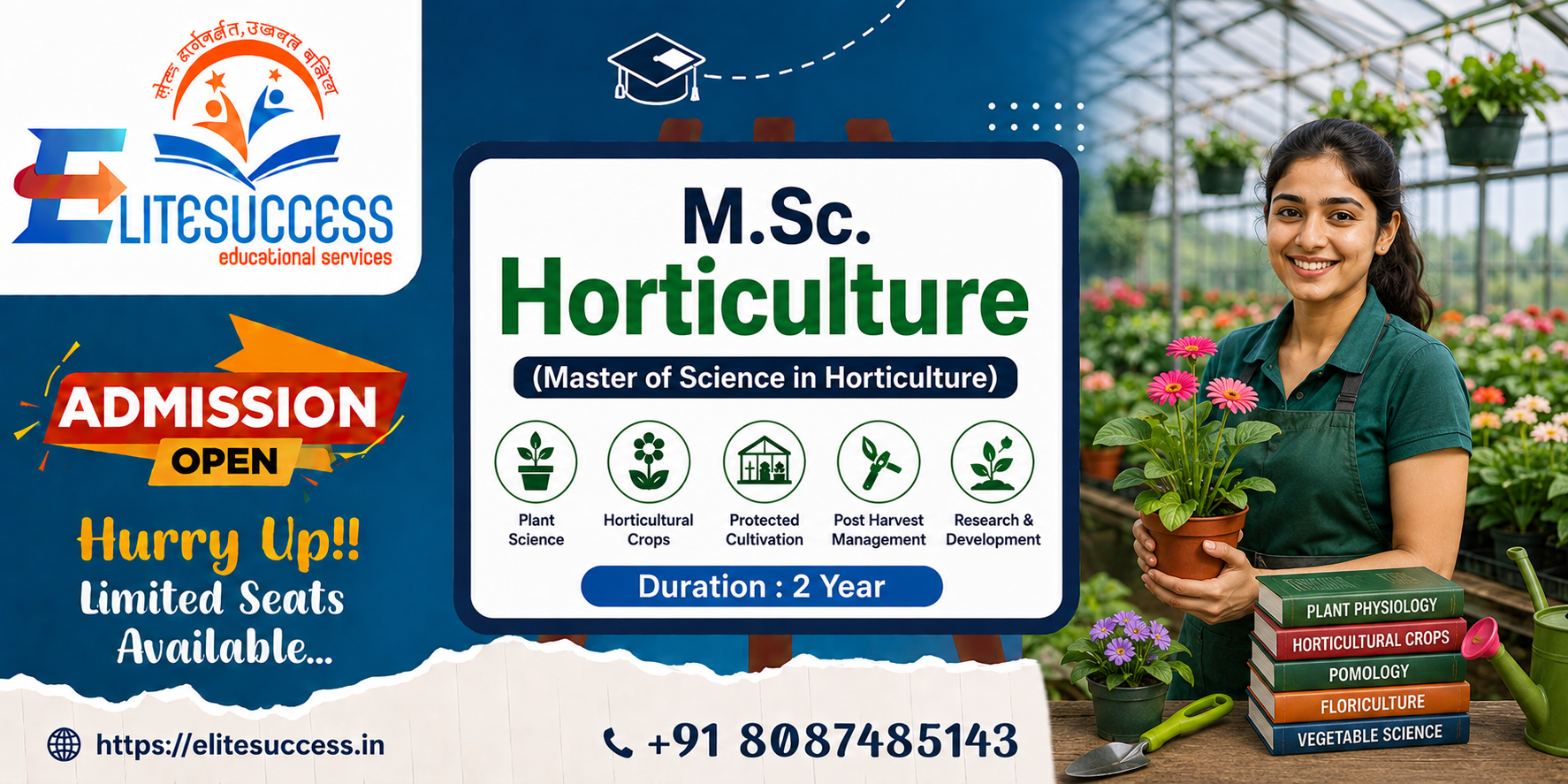
M.Sc. Horticulture
Certainly! A Master of Science (M.Sc.) in Horticulture is a specialized postgraduate degree focusing on the science and art of growing fruits, vegetables, nuts, seeds, herbs, sprouts, mushrooms, algae, and non-food crops such as flowers and grasses. Here’s a detailed look at what this program generally involves:
1. Program Overview
Objective:
- To provide advanced knowledge and practical skills in horticultural science, including crop management, plant breeding, pest management, and sustainable practices.
Duration:
- Typically 2 years, though this can vary based on the country and institution. Some programs offer part-time or online options.
2. Core Areas of Study
Plant Growth and Development:
- Study of plant physiology, including how plants grow, develop, and respond to environmental conditions.
- Techniques for optimizing growth and productivity in various horticultural crops.
Crop Production:
- Techniques for the cultivation of fruits, vegetables, herbs, and ornamental plants.
- Includes soil preparation, planting, irrigation, fertilization, and harvest management.
Horticultural Management:
- Management practices specific to horticultural operations, including crop planning, marketing, and economic analysis.
Plant Breeding and Genetics:
- Techniques for developing new plant varieties with improved traits such as yield, disease resistance, and quality.
- Genetic manipulation and biotechnological approaches in breeding.
Pest and Disease Management:
- Integrated pest management (IPM) strategies for controlling pests and diseases in horticultural crops.
- Use of biological, chemical, and cultural control methods.
Soil Science and Fertility:
- Study of soil properties, soil fertility, and practices to enhance soil health and productivity.
- Understanding of soil amendments and nutrient management.
Sustainable Horticulture:
- Practices that promote environmental stewardship, resource conservation, and sustainability in horticultural production.
- Techniques such as organic farming, water conservation, and integrated pest management.
Postharvest Technology:
- Study of the handling, storage, and processing of horticultural produce to maintain quality and extend shelf life.
3. Research and Specializations
Research Component:
- Most programs include a research project or thesis, allowing students to investigate a specific area of interest within horticulture.
Specializations:
- Some programs offer specializations such as fruit production, vegetable science, ornamental horticulture, or greenhouse management.
4. Career Opportunities
Industry Roles:
- Horticulturists, crop managers, nursery managers, landscape designers, and horticultural consultants.
- Positions in agricultural companies, nurseries, garden centers, and landscape design firms.
Academia and Research:
- Opportunities to pursue a Ph.D. and engage in advanced research or teaching roles at universities.
Agricultural Extension and Advisory Services:
- Providing advice and support to farmers and growers on best practices in horticulture.
Environmental and Conservation Roles:
- Work with organizations focusing on environmental conservation, urban green spaces, and sustainable land management.
5. Admission Requirements
Educational Background:
- Typically requires a bachelor’s degree in horticulture, plant science, agriculture, biology, or a related field.
Additional Requirements:
- Some programs may require GRE scores, letters of recommendation, and a statement of purpose outlining research interests.
6. Program Structure
Coursework:
- Core courses in horticultural science, plant physiology, pest management, and crop production.
- Electives based on student interests and specialization areas.
Thesis/Project:
- Research project or thesis on a topic related to horticulture.
Field Work:
- Practical experience through fieldwork, internships, or lab work to apply theoretical knowledge in real-world settings.
7. Institutions Offering M.Sc. in Horticulture
Global Examples:
- Many universities around the world offer M.Sc. programs in horticulture. Examples include:
- United States: University of California, Davis; Michigan State University; North Carolina State University.
- United Kingdom: University of Reading; University of Warwick.
- Australia: University of Melbourne; University of Sydney.
- India: Indian Agricultural Research Institute; Punjab Agricultural University.
8. Future Trends
Technological Integration:
- Increasing use of technology in horticulture, such as precision agriculture, automated systems, and data analytics.
Sustainability Focus:
- Growing emphasis on sustainable and organic horticultural practices, water conservation, and reducing environmental impact.
Global Food Security:
- Addressing challenges related to food security and nutrition through improved horticultural practices and crop management.
This program equips students with the expertise needed to manage and improve horticultural practices, contribute to research, and address challenges in the field of horticulture.
University List
| University Name | Country | State | City |
|---|---|---|---|
| ITM University Gwalior | India | Madhya Pradesh | Gwalior |
| GD Goenka University Sohna Gurgaon | India | Haryana | Gurgaon |
| AKS University, Satna Madhya Pradesh | India | Madhya Pradesh | Satna |
| Mangalayatan University, Jabalpur Madhya Pradesh | India | Madhya Pradesh | Jabalpur |
| G H Raisoni University, Saikheda Chhindwara | India | Madhya Pradesh | Chhindwara |
| Sam Higginbottom University of Agriculture, Technology and Sciences Prayagraj, Uttar Pradesh | India | Uttar Pradesh | Prayagraj |
| Centurion University of Technology and Management Village Paralakhemundi Orissa | India | Odisha | Paralakhemundi |
